
How Increased Interaction in the Workplace Can Lead to Accelerated Innovation
Related Trend Reports
Business, Branding, Credit Crunch, Tech, Architecture, Design, Home, Art & Design, Health, Life, Unique, Furniture, Modern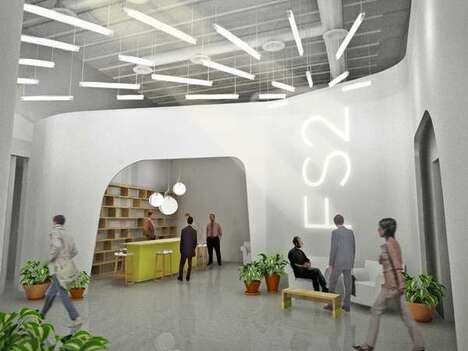 In the past, businesses have often avoided the implementation of workspaces that encourage interaction, fearing that any increased interaction in the workplace would lead to lower levels of productivity and thus, less innovation. However, extensive research points to the opposite. According to Tom Allen, a professor of organization studies at MIT, "...Increasing the number of colleagues with whom an employee consults contributes independently to performance."
 Thus, it comes as no surprise that we at Trend Hunter have seen a plethora of innovative office environments that focus on encouraging creativity and innovation through increasing the opportunities employees have to interact. Gone are cubicles and closed, individual spaces; many of today's offices contain common lounging areas, open floor plans and centrally located bathrooms. Perhaps the most well-known example is at Pixar, where there are whiskey lounges, espresso bars and a restroom situated in the center of the atrium, requiring workers from all corners of the building to walk through other departments to get to it, which in turn, increases their level of interactivity with other employees.
Other examples include the office design for the tech startup The Flagship. Created by design firm FS2, the office space fosters community and interaction in the workplace via a centrally located "piazza," which was designed to maximize peer conversations and stimulate knowledge-sharing. The offices for LEGO Denmark also include several common areas and meeting spaces to encourage collaboration and the sharing of ideas.
Some office design ideas are more conceptual but are nonetheless based on the premise that employees who interact and have fun together are generally more creative and innovative. One manifestation of this the Natural Systems Domination installation, located in Denver, Colorado. An artistic office concept, the installation aims to promote a work culture that rests on employee interaction with one another and the surrounding environment.
The takeaway is that when workers are able to communicate effectively and share their knowledge, they are more able to devise new and creative ideas, thereby stimulating innovation. As Jonah Lehrer, author of the book 'Imagine,' puts it, "The biggest problems we need to solve now require the expertise of people from different backgrounds who bridge the gap between disciplines." He goes on further to say, "Because it is the exchanges we don't expect, with the people we just met, that will change the way we think about everything."
Discover more changes occurring in the workplace and interior office design by downloading Trend Hunter's Design Trend Report.
References: trendhunter, trendreports
Featured Articles
Digital Decor
Wallpaper designs are infused with hi-tech elements for renewed appeal
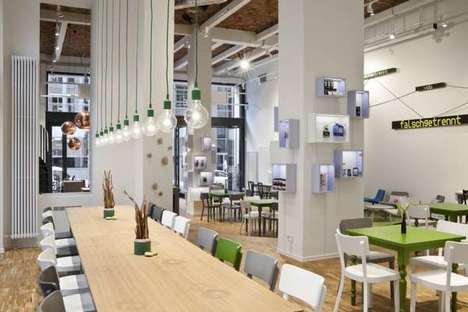
Imposed Interaction
Designers create workspaces that force collaboration and idea-sharing
Corporate Cozy
Innovative, fun office spaces as a reflection of a company's brand
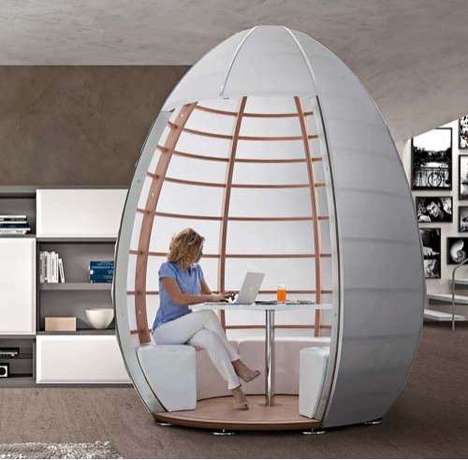
Preserving Privacy
Designs that encourage isolation at the workplace
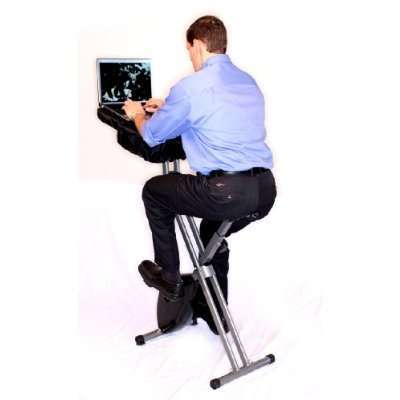
Workplace Workouts
Office exercise becomes efficient with desk-ready gym equipment
Funployment
Unemployment & shortened work hours put focus on enjoyment